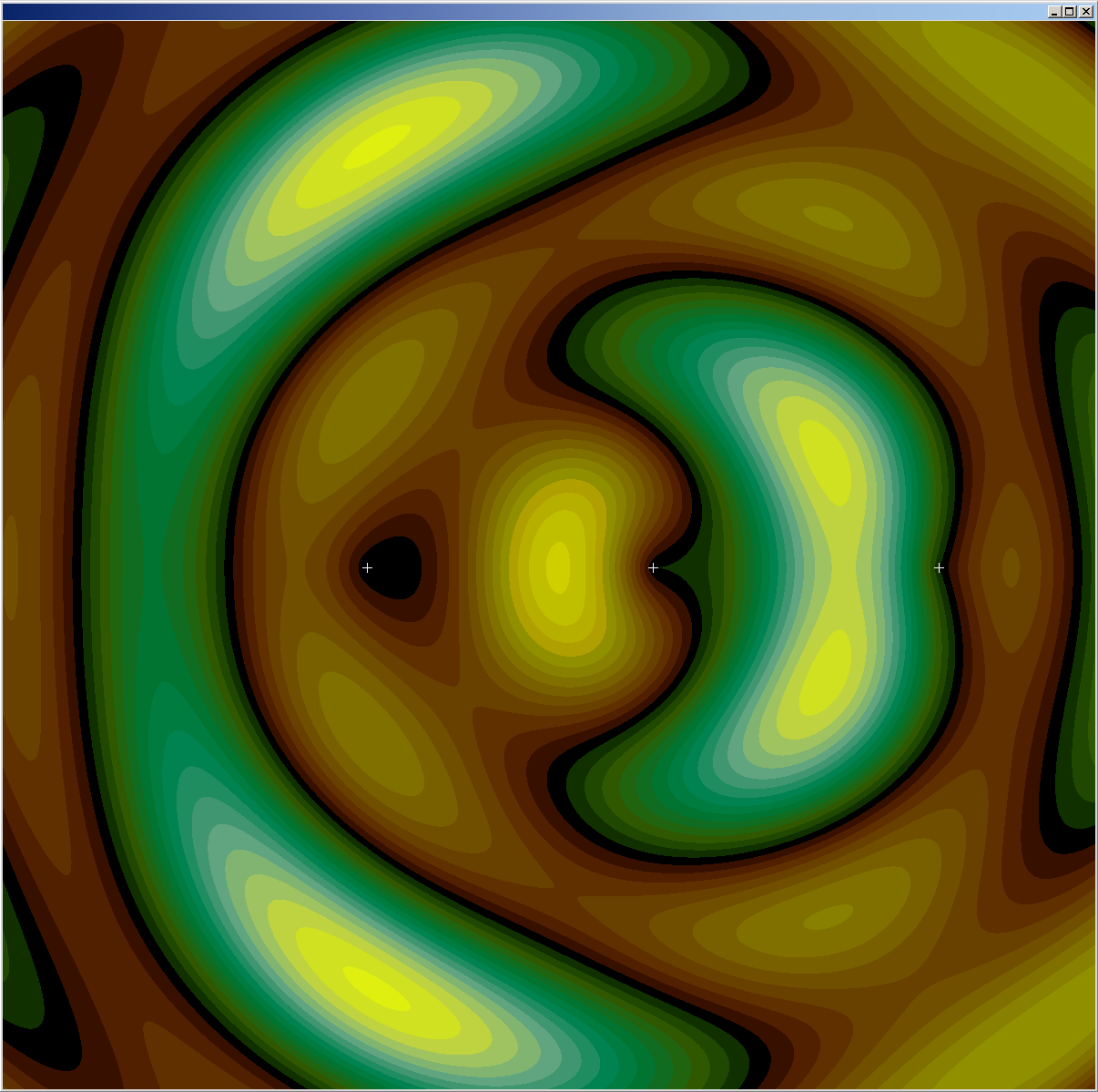
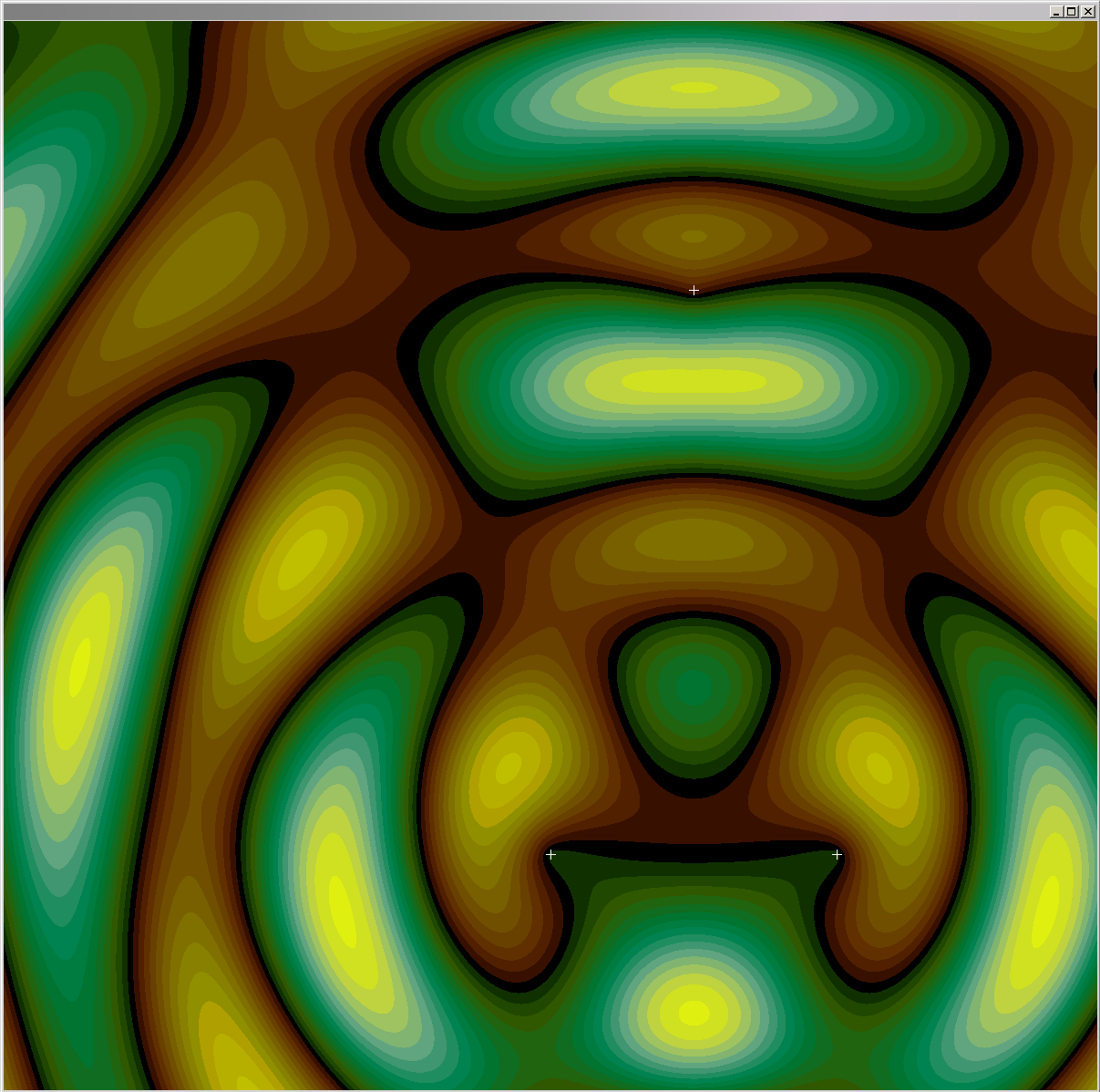
I’ve done extensive work trying to find all possible stable particle configurations using quantum interference, and only three combinations are showing definite stability; solutions exist for two and three poles. There is one valid set of four poles that statically would be stable but only in three dimensions (tetrahedral shape) but I see problems that indicate such a solution wouldn’t work dynamically (have to really watch out for confirmation bias because so far there is correlation to the real-life particle set) . It’s geometrically very clear that no 5 pole or higher can exist as a stable solution.
[UPDATE] More results I forgot to mention: A consequence of the 4 pole limit is that a twist ring cannot work. I approximated a twist ring with an 8-pole solution which shows no stability, and geometrically it’s easy to see why (an infinite overlap of wave phase points on every point of the ring). A ring will generate waves from all points about the ring, and there is no possible way this can exist in the single-value unitary rotation vector field. So, the twist ring, long promoted on this site as a valid field solution, bites the dust, at least for the unitary rotation vector field case. This is really interesting because it confirms the experimentally observed infinitely small point concept of current physics, and also seems to validate the Bohm interpretation of an infinitely small core with a non-causal guiding wave for particles. Here’s a picture–note the little crosses are the pole locations with stepwise increments in phase. You can tell that this is unstable because the phase delta between the sum of waves plus the particle phase must be zero and would show here as a black region–but instead many poles do not and cannot reside in a zero phase region. That is indicating that the particle phase and the wave phase are different, an impossibility in this single-valued unitary rotation vector field.
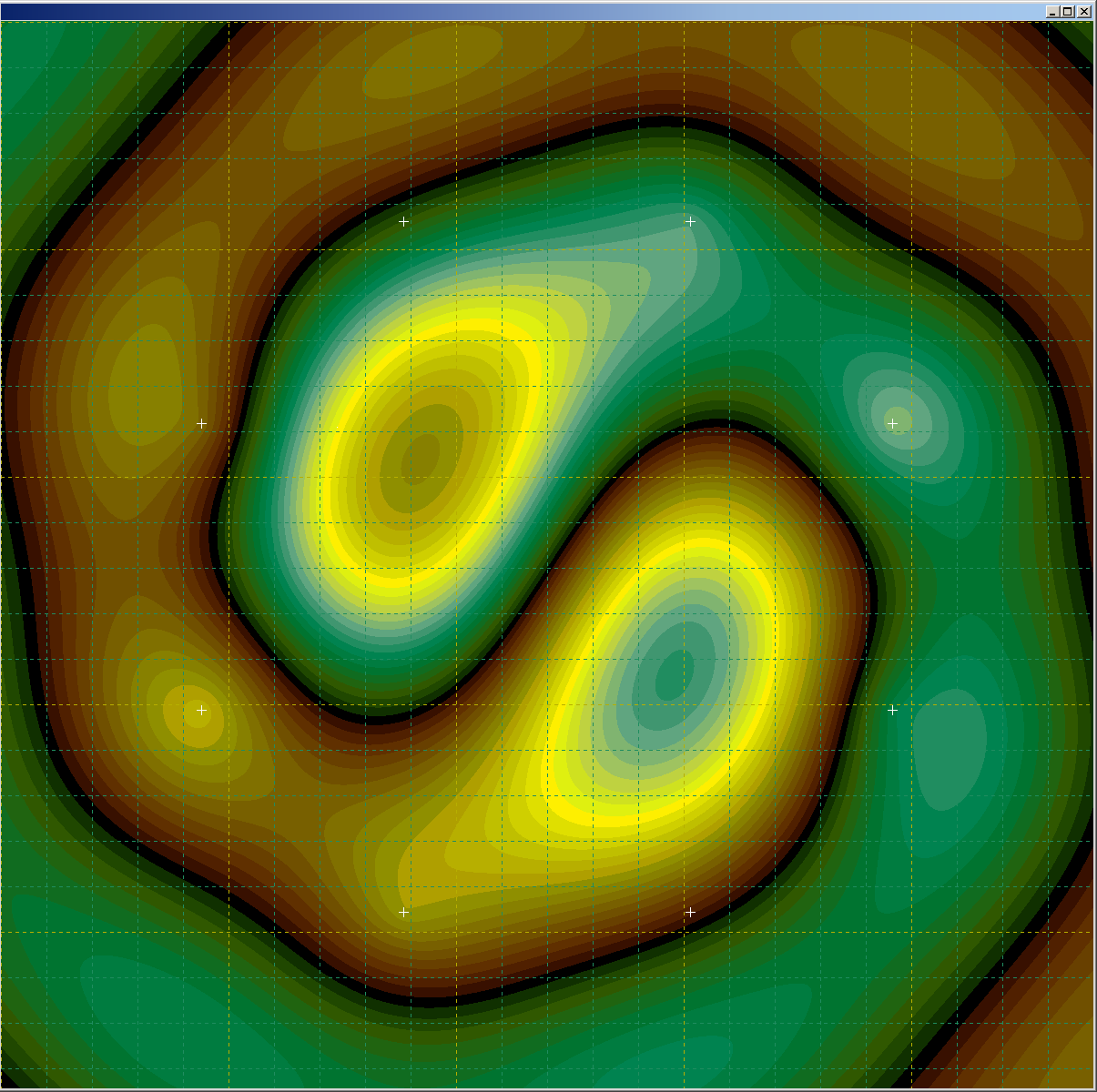
Also, (face-palm moment as I jumped too fast to conclusions) there actually are 5 pole and greater solutions, provided all the poles lie in a line. However, another constraint is emerging where this type of solution may not be stable except in the static case. Working on that one…
Here are pictures for two and three poles:

I’m now working on a sim where a unitary rotation vector field “photon” approaches and is captured by a field “electron”. Results shortly–should be interesting and a fairly definitive test for whether the unitary rotation vector field can really model reality.
Agemoz
Tags: physics, quantum, quantum theory, simulation
 Agemoz's Physics Blog
Leave a comment