Dr. Hossenfelder states that our universe includes all of 4D spacetime (what she calls the “Block Universe”), rather than just the 3D hypersurface we exist in and can observe. She uses the observer dependent event timing of special relativity and the overall spacetime curvature math of general relativity to make her case, and this view appears to be shared by physicists in general, including Dr. Thorne, the science adviser for the movie Interstellar. I disagree, and in previous posts I’ve detailed my claims and the evidence backing the Activation Layer concept (that is, that we exist in a single curved 3D slice, or hypersurface, within 4D spacetime that moves in the time direction). To be able to substantiate my claim, I must look at how special and general relativity would exist in within this Activation layer without requiring connections to other hypersurfaces or anything else in 4D spacetime.
In my previous post, “Special Relativity and the 3D Hypersurface Activation Layer” (https://wordpress.com/post/agemozphysics.com/1989), I show how special relativity is an observation effect that results because the observer’s frame of reference affects event simultaneity only for that observer–his frame of reference does not affect any event behavior that other observers see (unless they are observing that first observer). In that post I show how the wavelike construction of elementary particles results in the observation effects seen in special relativity, and how nothing outside of our 3D Activation Layer hypersurface existence is needed to explain special relativity.
General relativity is different in that all observers will see spacetime curvature, it affects all objects and fields within our universe. In this post, I will show how general relativity can exist solely within our hypersurface.
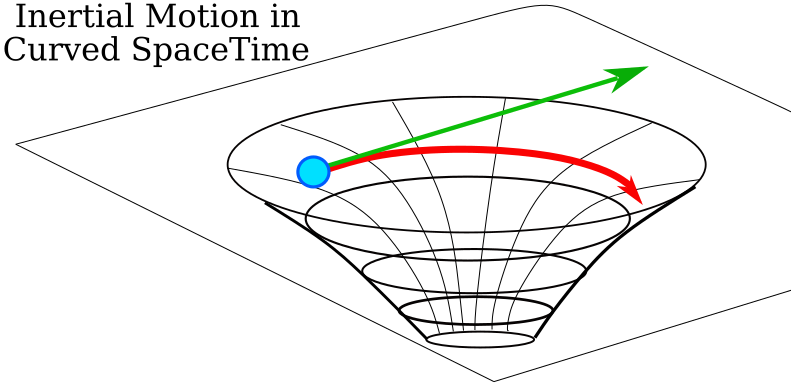
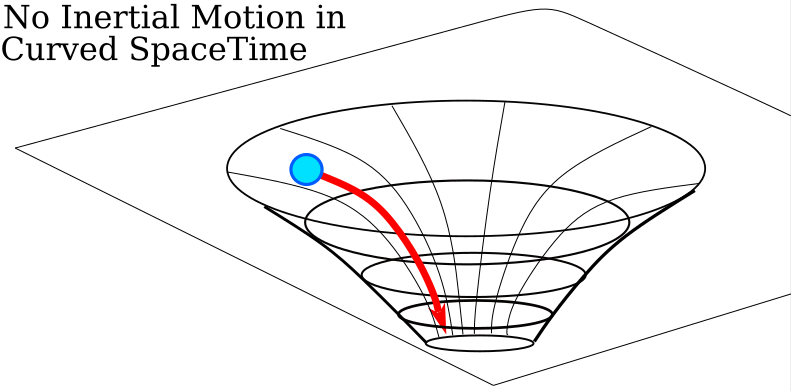
General relativity does not need anything outside of our Activation Layer hypersurface (although it is clear that the hypersurface must curve according to Einstein’s stress-energy tensor equation). You can see this if you look at how stress-energy tensors are defined as 4 dimensional entities, such as a t,x,y,z functional matrix. All contributions to the stress-energy tensor at a given point must either be local or propagate causally through the Activation Layer. This tensor then sets up spacetime curvature via a 4 dimensional metric, that when multiplied by a translation or rotation operator defines how that translation or rotation occurs within that curved spacetime–but within the Activation Layer hypersurface. We can then use LaGrangian equations of motion or other tools to find the path (e.g, a planetary orbit) taken in our potentially curved hypersurface.
Note, I’m only going to talk about what general relativity requires within standard 4D spacetime–hypothetical extradimensional theories will create exceptions, and yes, spacetime curvature can be affected by masses in other hypersurfaces–but general relativity does not require those. It can wholly exist and operate within our existence as a 3D hypersurface moving in the time dimension within 4D spacetime. If we could show the existence of stress-energy tensors that required sums over multiple times (multiple hypersurface x,y,z points) that didn’t just propagate their effect through our Activation Layer, then the Block Universe concept would have to be true, but my research shows no such entity has been proven to exist. To reiterate–nothing from outside our hypersurface existence is required for general relativity to hold.
Dr. Hossenfelder believes that our past is left behind in an accessible set of successive hypersurfaces, sort of like the tesseract we see in the movie Interstellar, and should be accessible. I claim that the mass and resulting curvature induced by such an enormous object as the tesseract makes such a conclusion impossible. Within the limits of what we have observed in the cosmos, no such masses exist outside of our Activation Layer hypersurface. These copies of the past are not necessary for any aspect of either special or general relativity, thus, the Activation Layer is necessary and is also sufficient for our existence.
Agemoz


 Agemoz's Physics Blog